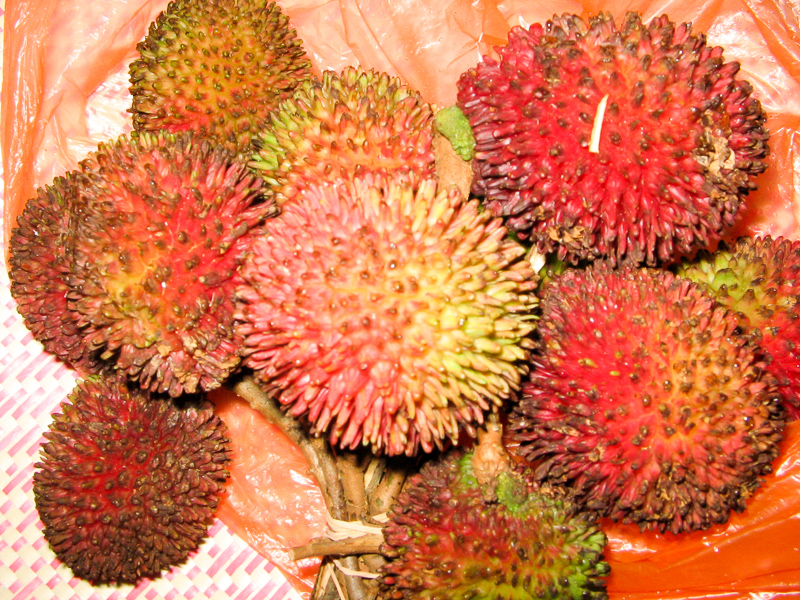
말레이어 사전에서 pulasan 의 정의
pulasan sj plant (pokok spt pokok rambutan), 목탄, gerat, merat, reba 돌연변이, kaffir rambutan, Nephelium mutabile; ~ hutana) sj 식물 (달콤한 열매 인 높은 나무), peachy jackfruit, 거칠기, 어업, 악어, 샐비어, Nauclea maingayi; b) 식물 (나무), 작업장, empayan, kelampi, kalalayan, naga, kuwal, padung 목재, Anthocephalus cadamba. pulasan sj tumbuhan (pokok spt pokok rambutan), arang para, gerat, merat, mutan reba, rambutan kafri, Nephelium mutabile; ~ hutana) sj tumbuhan (pokok tinggi yg buahnya manis), buah nangka pipit, kelempayan, mempayan, mengkal, tumbung dayung, Nauclea maingayi; b) sj tumbuhan (pokok), bengkel, empayan, kelampi, kelempayan, mempayan, mengkal, timbung dayung, Anthocephalus cadamba.
말레이어 사전에서 «pulasan» 의
원래 정의 보기를 원하면 클릭하세요
한국어 사전에서
자동 번역 보기를 원하면 클릭하세요
«PULASAN» 관련 말레이어 책
다음 도서 목록 항목에서
pulasan 의 용법을 확인하세요.
pulasan 에 관련된 책과 해당 책의 짧은 발췌문을 통해 말레이어 서적에서 단어가 사용되는 맥락을 제공합니다.
comes from the Malay word pulas (twist). The fruit is opened through the act of twisting the fruit with both hands, thus the name pulasan. The pulasan tree is an ornamental.
Lambert M Surhone, Mariam T Tennoe, Susan F Henssonow, 2011
2
Edible Medicinal And Non-Medicinal Plants: Volume 6, Fruits
Burmese: Kyetmauk; Dutch: Kapoelasan; French: Kapulasan; Indonesia: Rambutan Ake, Rambutan Babat, Sebabat, (Java), Tenggaring (Kalimantan Tengah), Pulasan, Kapulasan, (Sundanese), Tukou Biawak (Kubu), Molaitomo (Gorontalo), ...
3
Tropical Fruits: Crop Production Science in Horticulture 24
The pulasan or poolasan, N. mutabile Blume (Sapindaceae), is sometimes confused with its close relative rambutan, which it closely resembles. The common names include ngo-khonsan (Thailand), rambutan-kafri and kapalasan (Indonesia), ...
Robert E. Paull, Odilio Duarte, 2012
4
The Encyclopedia of Fruit and Nuts - Halaman 816
Watson, B.J. (1984) Rambutan (Nephelium lappaceum L.), Pulasan (Nephelium mutabile Blume). In: Page, P.E. (Compiler) Tropical Tree Fruits for Australia. Queensland Dept. Primary Industry Information Series Q183018. Queensland Dept.
Jules Janick, Robert E. Paull, 2008
5
Temiar Religion, 1964-2012: Enchantment, ...
cameh (pulasan) capuu" (manggis asam, manggis hutan) cermeer (?) gayeek (buah lada) garcayes (a type of langsat) garaah (?) (eaten by game animals) hakoor (?) huuh (habok mas) kabaak (rambutan asam) korii” (tengka bewa Ibiawak?] ...
6
Buah kering di hujung ranting - Halaman 15
untuk melihat anak sungai dan pohon pulasan. Kalau aku ada di kampung ketika itu mungkin juga aku menitiskan air mata. Pohon pulasan itu besar juga ertinya dalam hidup ku. Di pohon pulasan itulah tercetus satu peristiwa yang mencorak ...
Marwilis Haji Yusof, 1990
7
Penjelidikan histopatologi hati pada anak dengan ikterus: - Halaman 83
Dengan pulasan Mayer atau pulasan F. A. S. dapat dibedakan apakah saluran empedu itu suatu duktulus atau duktus, karena duktus lumennja berlapiskan lendir jang terculas merah muda. Daripada pembuluh darah ditentukan apakah ...
8
The Production of Economic Fruits in South-East Asia - Halaman 164
Origin and Distribution The rambutan {Nephelium lappaceum L.) and pulasan (Nephelium muta- bile Blume) are fruits of wide popularity in Malaysia, Thailand, and other ASEAN countries. They are cultivated throughout the archipelago and ...
Othman Yaacob, Suranant Subhadrabandhu, 1995
9
Tropical and Subtropical Fruits - Halaman 324
Pulasan differs from rambutan by having shorter, broader, stump-like protuberances. The pericarp color of rambutan varies from green, red, blood-red, orange, pink or yellow, with spinterns that remain green or red when ripe. The pulasan ...
Philip E. Shaw, Harvey T. Chan, Steven Nagy, 1998
10
The Sino-Vietnamese Difference on the Hoàng Sa and ...
The Wu Jing Zong Yao indicates the itinerary from Tunmensan to India: "From Tunmensan, with an Eastern wind, going towards the South-west for seven days, one will arrive in Jiurulozhou and in three days more, one will reach Pulasan.